

Understanding the Player’s Mindset in Gambling
The allure of casino games, whether played online or in a physical establishment, often hinges on a complex interplay of psychology and probability. Understanding the player’s mindset is crucial for both operators and those who wish to navigate the gambling landscape more effectively. Many players are driven by a desire for excitement, the thrill of chance, and the dream of a significant win; this emotional drive can sometimes overshadow logical decision-making, making players susceptible to cognitive biases, and it is within this context that players might seek out platforms such as bigwinbox.

Recognizing these psychological triggers is key. For instance, the “near miss” phenomenon, where a player almost wins, can create a powerful urge to continue playing, fostering a belief that a win is imminent. Similarly, the feeling of control, even in games of pure chance, can lead to overconfidence. Online platforms often leverage these psychological elements by offering engaging game interfaces, bonus structures, and promotional incentives designed to maintain player interest and encourage continued participation.
The Mathematical Edge: Odds and Probability in Casino Games
At its core, every casino game is governed by mathematical principles that dictate the odds of winning. The “house edge” is a statistical advantage built into the game’s design, ensuring that, over the long run, the casino will profit. This edge varies significantly between different games and even within variations of the same game. For example, certain slot machines have a lower return-to-player (RTP) percentage than others, meaning a smaller portion of wagered money is returned to players over time.
Players who understand these odds can make more informed choices. While it’s impossible to eliminate the house edge entirely, opting for games with a lower house edge, such as blackjack or certain video poker variants, can improve a player’s long-term prospects. Careful management of bankrolls is also essential; setting limits on spending and knowing when to walk away are as important as understanding the probabilities of the games themselves. Platforms that are transparent about game RTPs and offer a variety of games with differing odds cater to a more discerning player base.
Strategies for Mitigating the House Advantage
While absolute victory against the house is statistically improbable in the long run, players can employ strategies to mitigate its advantage and prolong their playing sessions. This often involves a combination of smart game selection and disciplined betting. For instance, in games like blackjack, employing basic strategy can significantly reduce the house edge by dictating the optimal play for every hand scenario based on the player’s cards and the dealer’s upcard.
Beyond specific game strategies, effective bankroll management is paramount. This involves setting a strict budget for gambling sessions and sticking to it, regardless of wins or losses. It also means understanding when to stop playing – whether you’ve reached a predetermined win target or a loss limit. Online casinos often provide tools for players to set these limits, encouraging responsible gambling practices alongside their entertainment offerings. By focusing on games with better odds and managing finances wisely, players can aim for more enjoyable and potentially less costly gaming experiences.
Cognitive Biases and Their Impact on Gambling Decisions
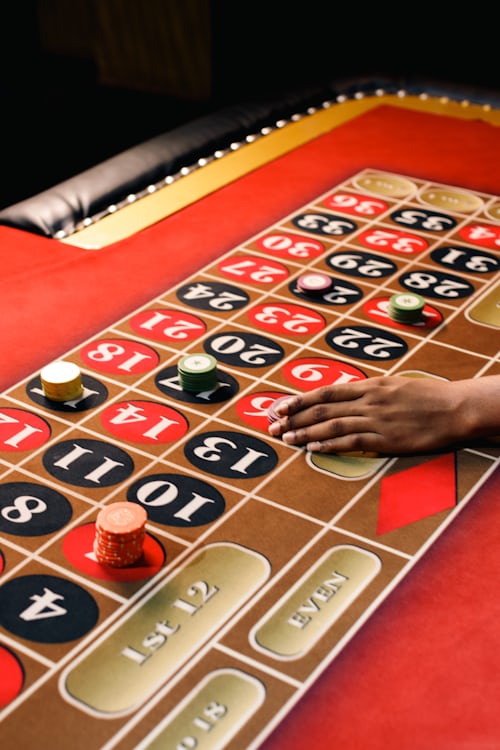
Human psychology is rife with cognitive biases that can significantly influence decision-making, especially in the high-stakes environment of gambling. The “gambler’s fallacy,” for example, is the mistaken belief that past independent events can influence future outcomes; believing that a string of red numbers on a roulette wheel makes black more likely to appear next is a prime example. This is contrary to the mathematical reality of independent probabilities.
Another common bias is “confirmation bias,” where players tend to seek out and interpret information that confirms their pre-existing beliefs about luck or winning streaks, while ignoring evidence to the contrary. The excitement and potential rewards of gambling can amplify these biases, leading to impulsive decisions and a disregard for the statistical realities. Recognizing these psychological pitfalls is a critical step towards more rational play, even when the thrill of the game is at its peak. Platforms that promote awareness of these biases can contribute to a healthier gaming environment.
Big Winbox: Navigating the Online Casino Experience
Big Winbox emerges as a prominent online platform designed to offer a wide array of casino games, from classic slots to engaging table games. It aims to provide a comprehensive gaming experience, blending entertainment with the potential for wins. Understanding the psychological and mathematical underpinnings of gambling can help players engage with platforms like Big Winbox more effectively, making informed choices about the games they play and how they manage their stakes.
The platform’s success in attracting and retaining players often lies in its ability to balance an exciting user interface with fair game mechanics. By offering a diverse selection of games, each with its own set of odds and potential strategies, Big Winbox caters to various player preferences. Players can explore different game types, learn about their respective RTPs, and practice responsible bankroll management, all within the digital environment. This approach allows for an engaging experience while acknowledging the inherent probabilities involved in online casino entertainment.